The key benefit of a backlog refinement session
The key benefit of a backlog refinement session is that the whole team understands the upcoming work before the sprint starts. The tickets are clear, split into pieces that fit in a sprint, and estimated. When sprint planning begins, the team picks work it already knows instead of discovering what the work is.
If you're answering a quiz question, that's the answer. The rest of this post explains why it's true, what else you get from a session, and what one looks like in practice.
What a refinement session is
Backlog refinement is when the team and the product owner go through the top of the product backlog and get tickets ready. In the Scrum Guide it's an ongoing activity, not one of the official events, so teams run it in different ways. Some hold a weekly hour. Some do two short sessions per sprint. Some call it grooming, which is the older name for the same thing.
The output is simple. A ticket that comes out of refinement is ready to be pulled into a sprint. A ticket that doesn't is parked until someone can explain it.
Why shared understanding is the key benefit
Most of the other benefits follow from this one. I've watched the same thing happen on several teams. A ticket reads "add CSV export" and gets pulled into a sprint. On day three a developer finds out that nobody decided which columns to include, and the product owner is on leave. The ticket sits for a week, and it ends up in the next sprint.
A refinement session catches that on day zero. Someone asks "which columns?", and the product owner either answers or takes the question away. The team finds the problem while it's cheap to fix.
That shared understanding also changes the first hour of sprint planning. Without refinement, the team spends it reading tickets for the first time and arguing about what they mean. With refinement, planning is mostly about capacity: how much of the ready work fits this sprint.
Other benefits you get along the way
- Better estimates. People estimate better after they've heard what the ticket involves and what could go wrong. The person who knows the code best explains the risks, and the estimate reflects them.
- Smaller tickets. Big tickets get split while the team still has time to think. Small tickets finish inside a sprint, so the sprint goal is easier to hit.
- Fewer surprises mid-sprint. Missing acceptance criteria and hidden dependencies come out in the meeting, not in the middle of the work.
- Shared knowledge. Developers hear how parts of the system they haven't touched work. That makes it easier to swap who picks up a ticket.
- A backlog the product owner can trust. Tickets that nobody can explain get found and cut, so the list stays honest.
I wrote more about the case for doing this at all in Why backlog refinement is important.
What happens in a session
- The product owner picks the next ten or so tickets, usually the ones likely to go into the next one or two sprints.
- For each ticket, the product owner explains the goal and the team asks questions until the acceptance criteria are clear.
- If the ticket is too big for one sprint, the team splits it.
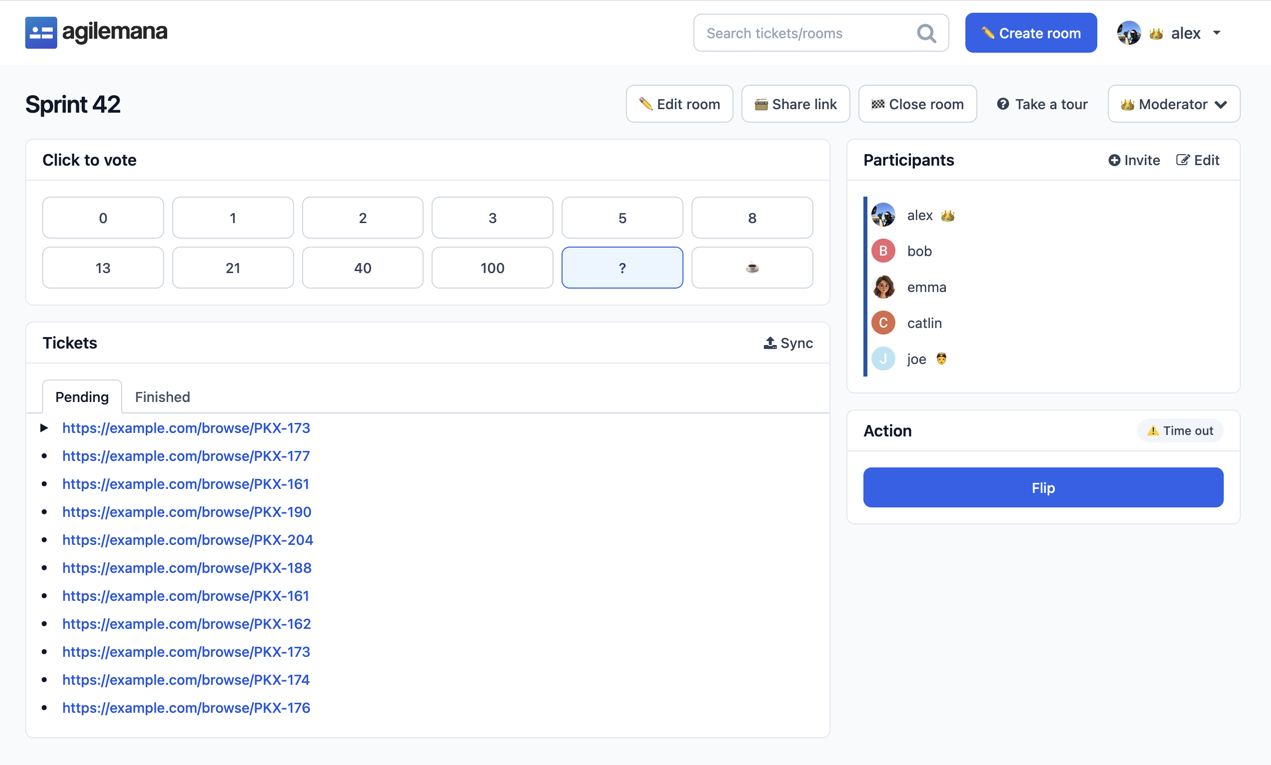
- The team estimates it. Many teams use planning poker so everyone votes in private and the first number said out loud doesn't decide the rest.
- If nobody can explain the ticket after about five minutes, it gets parked and the team moves on.
How to get the benefit and not just the meeting
A refinement session that doesn't produce shared understanding is just another meeting. These habits make the difference:
- Send the tickets the day before, so people arrive with questions.
- Invite the people who will do the work, not only the people who manage it.
- Keep it to an hour. Attention drops fast after that.
- Write down the answers in the ticket. If the answer lives only in the meeting, the benefit lasts until people forget it.
- Park tickets that stay unclear. Pulling an unready ticket into a sprint costs more than skipping it.
Try it on your next backlog
Pick the next ten tickets, send them to the team, and book an hour. Then create a free room for the estimating part and see how much clearer the sprint plan gets.
Publish date: 2026-11-21